Two Generations, One Icon
The 991 and 992 generations of the Porsche 911 look closely related at a glance, but drive them back to back and you realise they’re separated by more than just a model code. They represent two different answers to the same question: how far can you push technology without losing the soul of a rear-engined sports car? For buyers and enthusiasts from Stuttgart to Porsche 911 Dubai, understanding the character split between 991 and 992 is essential if you’re choosing which generation belongs in your garage.
Design: Evolution Versus Presence
The 991 arrived as a modern interpretation of classic 911 proportions. It’s relatively slim, elegant, and understated. The surfaces are clean, the rear lights are compact, and the car still carries a hint of the air-cooled era in its stance. Park a 991 in a normal car park and it blends in just enough to feel discreet.
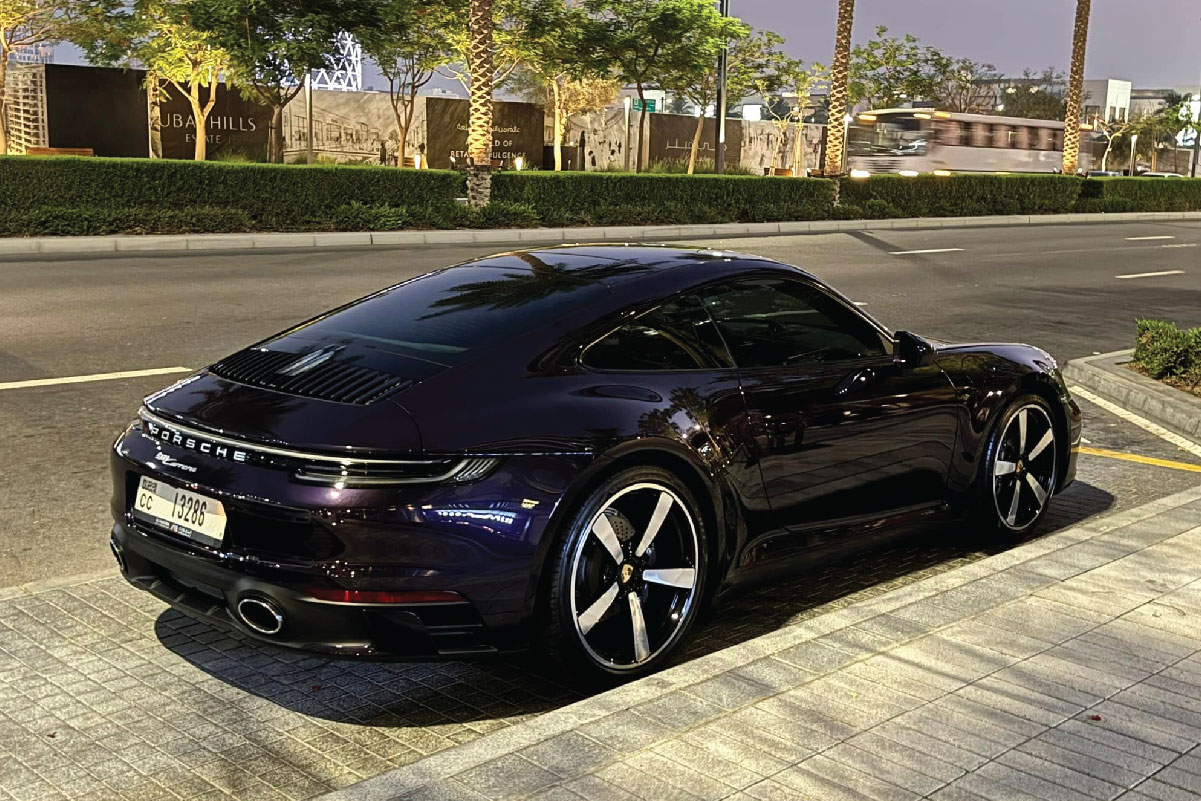
The 992, by contrast, walks into the same space like it owns it. The body is wider on all models, the shoulders are more pronounced, and the full-width light bar across the rear turns the car into a piece of rolling light sculpture at night. Even the front end feels more assertive, with stronger lines and more muscular intakes. Where the 991 looks like a refined evolution, the 992 feels like a confident statement that the 911 has nothing left to prove.
Cabin and Technology: Cockpit Versus Command Centre
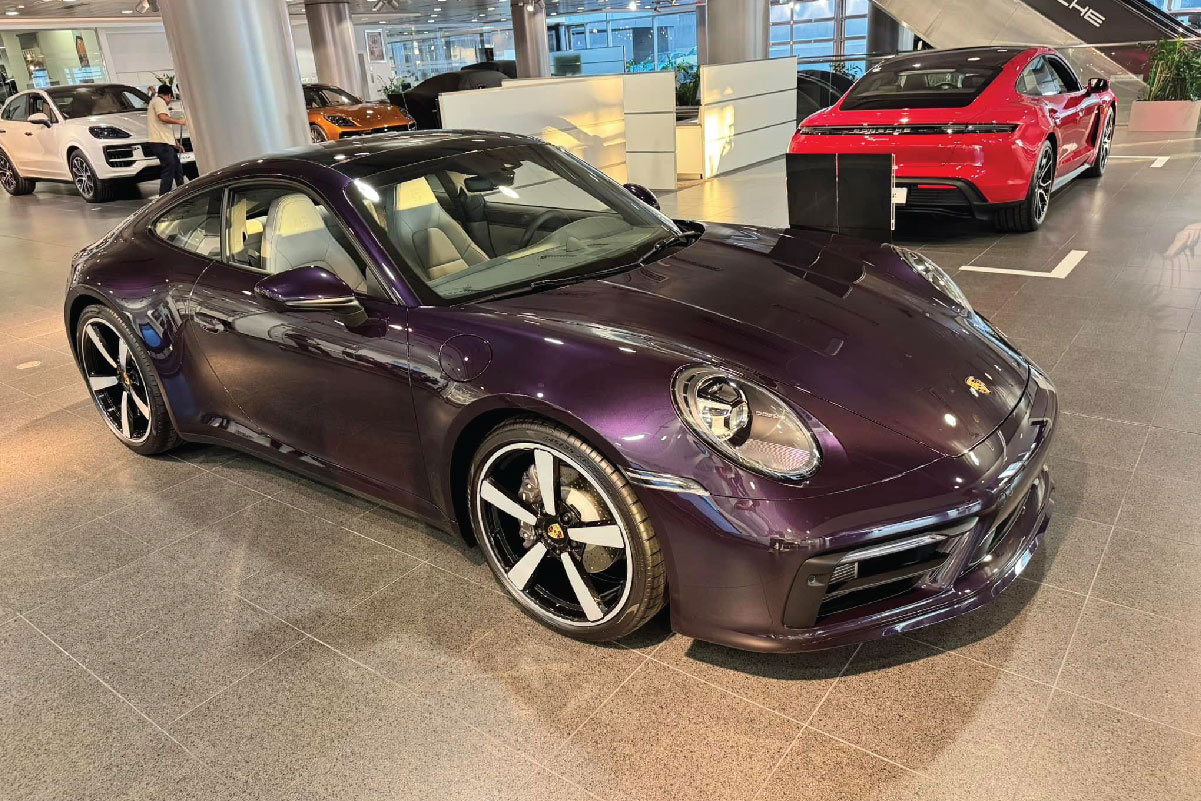
Inside, the 991 is the last 911 to feel primarily analogue. The central rev counter dominates the view, physical buttons line the centre console, and the infotainment screen feels like a supporting actor rather than the star. It’s a driver’s cockpit with modern conveniences layered in around the edges. You get navigation, audio and driving modes, but they never shout for attention.
Climb into a 992 and the atmosphere changes immediately. The architecture is broader and more horizontal, and the screen becomes a central character in the cabin. Multiple digital displays flank the rev counter, touch controls replace many physical switches, and connectivity is much deeper. For some, especially tech-minded owners in Porsche 911 UAE, this is a huge advantage: the car fits seamlessly into a connected life. For others, the extra screens feel like noise intruding on the purity of the driving position. The question is whether you want information or intimacy.
Engines and Character: Edge Versus Polish
Early 991 Carreras launched with naturally aspirated flat-sixes that loved to chase the red line. Later, Porsche moved to turbocharged engines for the Carrera range, but the generation retained a slightly rawer flavour in the way power arrived. Even the turbocharged 991 Carreras have a moment of anticipation before the torque hits, giving acceleration a rising, dramatic feel that rewards precise throttle use.
The 992 takes that turbo formula and smooths it almost to perfection. There’s less sense of “waiting” for boost; torque is available earlier and more evenly across the rev range. The result is a car that feels relentlessly capable in any gear, at any speed. It’s devastatingly effective on fast roads, but some drivers miss the sense of theatre the 991 delivers when you really work the engine. The 992 is the better tool; the 991 can feel like the better dance partner.
Chassis and Handling: Fluency Versus Authority
On the road, the 991 is defined by its flow. Steering is light but communicative, body control is tight without ever feeling brittle, and the car encourages you to link corners together in long, smooth arcs. It’s happy being driven at eight-tenths; you don’t need to be at the limit to feel what’s happening underneath you.
The 992, helped by a wider track, cleverer electronics and more aggressive tyres, brings more outright grip and stability. Rear-axle steering and advanced stability systems mean the car can carry huge speed with surprising calm. On a challenging mountain route or a fast circuit, the 992 feels like the car you could trust in bad weather or late-braking heroics. Yet that capability comes with a different sort of feedback: it tells you what it can do, but it also reminds you that you’re operating a very serious piece of hardware.
Ownership Experience: Which 911 Suits Which Driver?
Live with a 991 and you get a car that mixes modern reliability with a slightly old-school flavour. It’s the generation many enthusiasts choose when they want something that still feels like a “classic” to drive but can be used every day without anxiety. Cabin quality is high, ergonomics are simple, and the car never overwhelms you with choice.
The 992, meanwhile, is shaped for a world where a 911 might be someone’s only car. It’s quieter on the motorway, more refined at low speed, and its assistance systems make long journeys easier. It’s also the more future-proof option if you care about technology, emissions standards, and long-term parts availability. For drivers in active hubs like the Porsche 911 Community, the 992 can feel like the smarter long-view decision.
Head Versus Heart
In the end, choosing between 991 and 992 is not a question of which is “better.” The 992 is objectively faster, safer, and more sophisticated. It feels like a 911 that has grown into its legend. The 991, though, carries a little more vulnerability and charm. It asks more of the driver and gives more personality in return.
If your head is doing the shopping, the 992 makes a compelling case. If your heart has a vote, the 991 will not leave the conversation quietly. Either way, you’re not just choosing a generation of 911. You’re choosing which version of yourself you want the car to bring out every time you turn the key.
- Popular Models and Generations
- 09/12/2025